
The City Speaks 1971–1979
For the past couple of years I have been researching Birmingham’s alternative press from the 1970s and early 1980s. My gaze was initially on the suburban press, given my previous work on hyperlocal journalism. But in the last 12 months I have been working with Brian Homer on staging an exhibition to mark the accession to the archive here at Birmingham City University of a collection of publications that he helped produce.
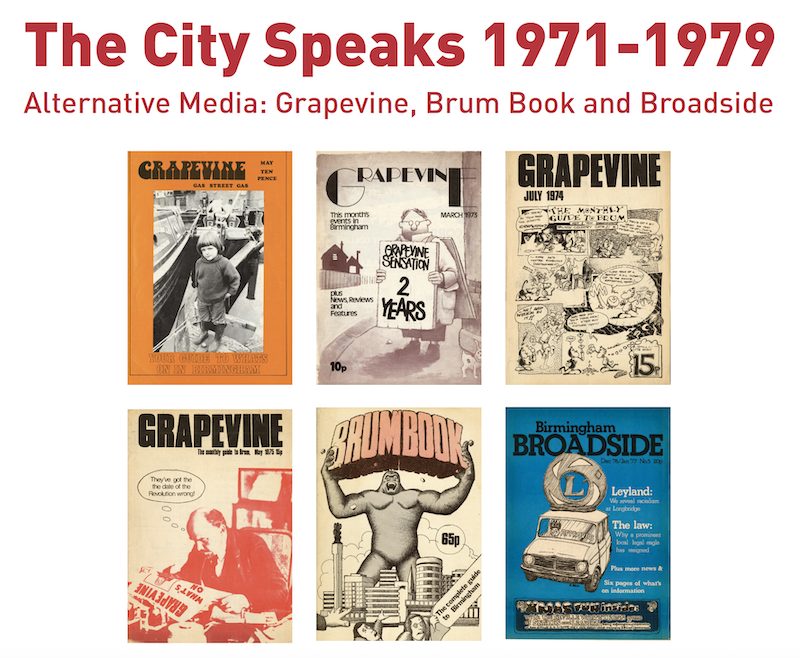
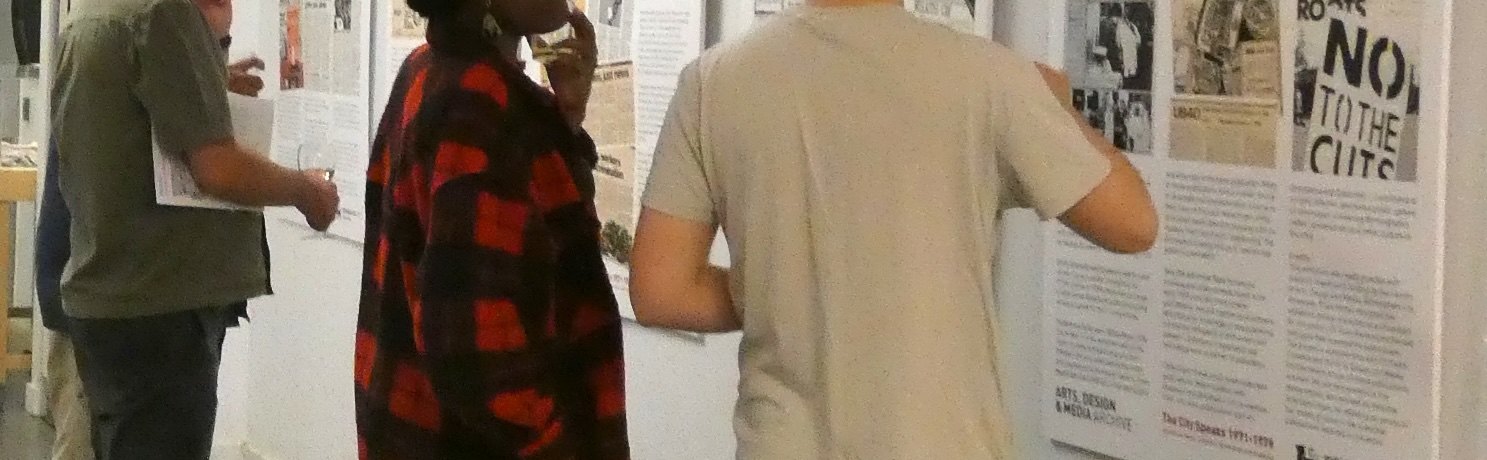
The City Speaks 1971-1979 was staged at Birmingham City University from May to September 2025 and looked at the publications, Grapevine (1971-75), the one-off Brum Book (1975), and Broadside (1976-1979).
The 1970s were a fertile decade for independent media across the UK. Cheaper printing technologies and the energy of counter-culture gave rise to alternative publications that challenged the mainstream press. In Birmingham, the titles that Homer and colleagues published amplified local voices, highlighted community struggles, and offered a sharp counterpoint to the version of the city as seen through the mainstream local press.
Grapevine: News from Nowhere
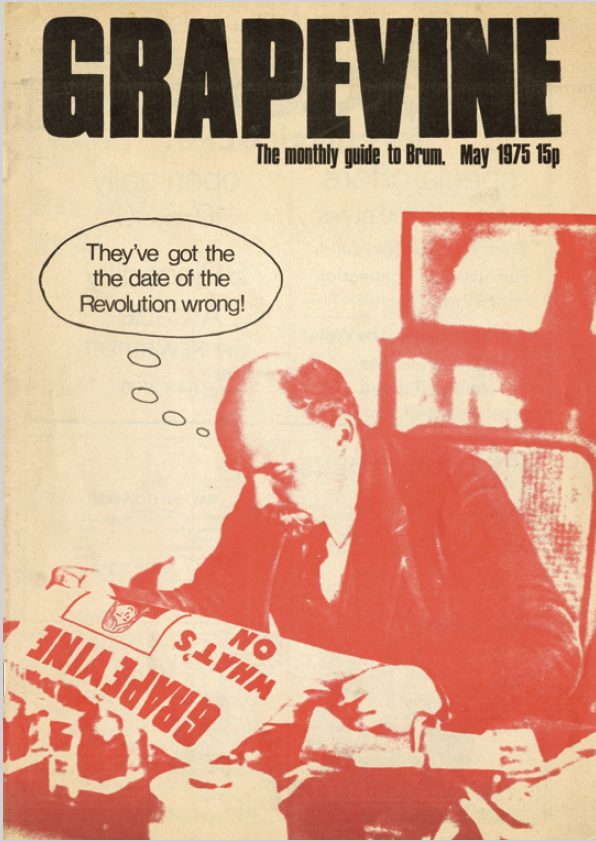
Grapevine’s final issue in May 1975
Launched in 1971, Grapevine came out monthly, mixing arts listings with pointed political coverage. Founders Brian Homer and Trevor Fisher rooted the magazine in grassroots activity and took on housing shortages, urban planning, and the consistently queried what they saw as the deeply conservative and anti-trade union slant of local reporting. Cultural coverage sat at the core. The magazine gave space to community events and local artists that the mainstream ignored. Financial pressure ended its run in 1975 after 52 issues.
Brum Book and Broadside
Intended as an annual publication, Brum Book (1975) shifted format. It was a lively practical guide to city life with advice on services, bureaucracy, and survival tactics across Birmingham.

Broadside cover from Feb / Mar 1977
It wasn’t repeated but in 1976, Broadside stepped in as a monthly with a more overtly radical voice. It challenged police misconduct, tracked far-right activity, and covered race relations.
It also tied the city’s punk and new wave scenes to wider critiques of authority and conformity. Like Grapevine, it was highly effective in highlighting aspects of the city’s cultural scene ignored by the mainstream press. Its closure in 1979 was in part due a threat of legal action by a local councillor following rather pointed coverage of their business affairs.
From Suburbs to Self-Portraits
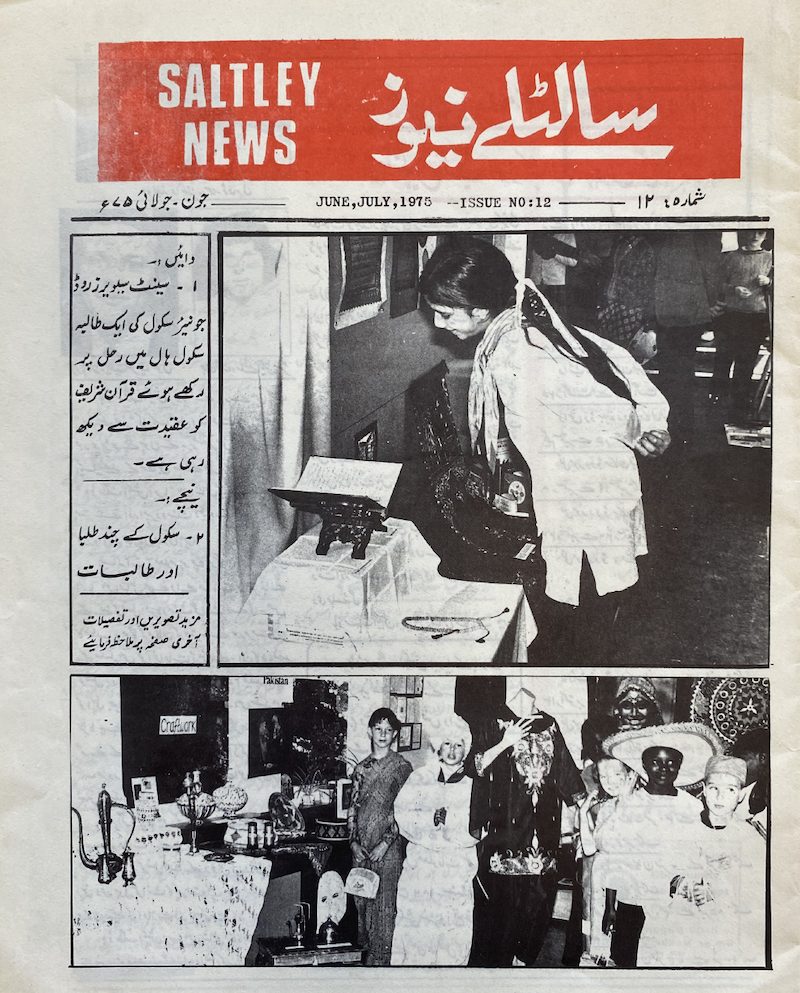
Saltley News was published in Urdu
Alternative publishing did not stop at the city centre. Hyperlocal titles such as The Moseley Paper, Handsworth’s Trapeze, and Saltley News delivered news that supported campaigns and fought top-down redevelopment. After Broadside folded its core team pushed into new work. Homer, Derek Bishton, and John Reardon founded the Sidelines design agency, helped start the photography magazine Ten 8, and created the Handsworth Self Portrait project to let residents represent themselves.
Exhibiting the alternative press
The exhibition itself was a chance for contributors and their friends and families to come together and reflect on the publications and the period in general. It was a privilege to hear not just of the motivation behind the publications themselves, but the day-to-day aspects of producing them with little budget but lots of enthusiasm and passion.
Legacy and Lessons
The 1970s alternative press proved that community voices can be loud, creative, and critical without big budgets. These titles offered counter-narratives to official accounts of Birmingham during a period of economic strain and cultural richness. The alternative press of 1970s Birmingham did more than report events. It opened up space for people to see their city differently, to question power, and to imagine new possibilities.
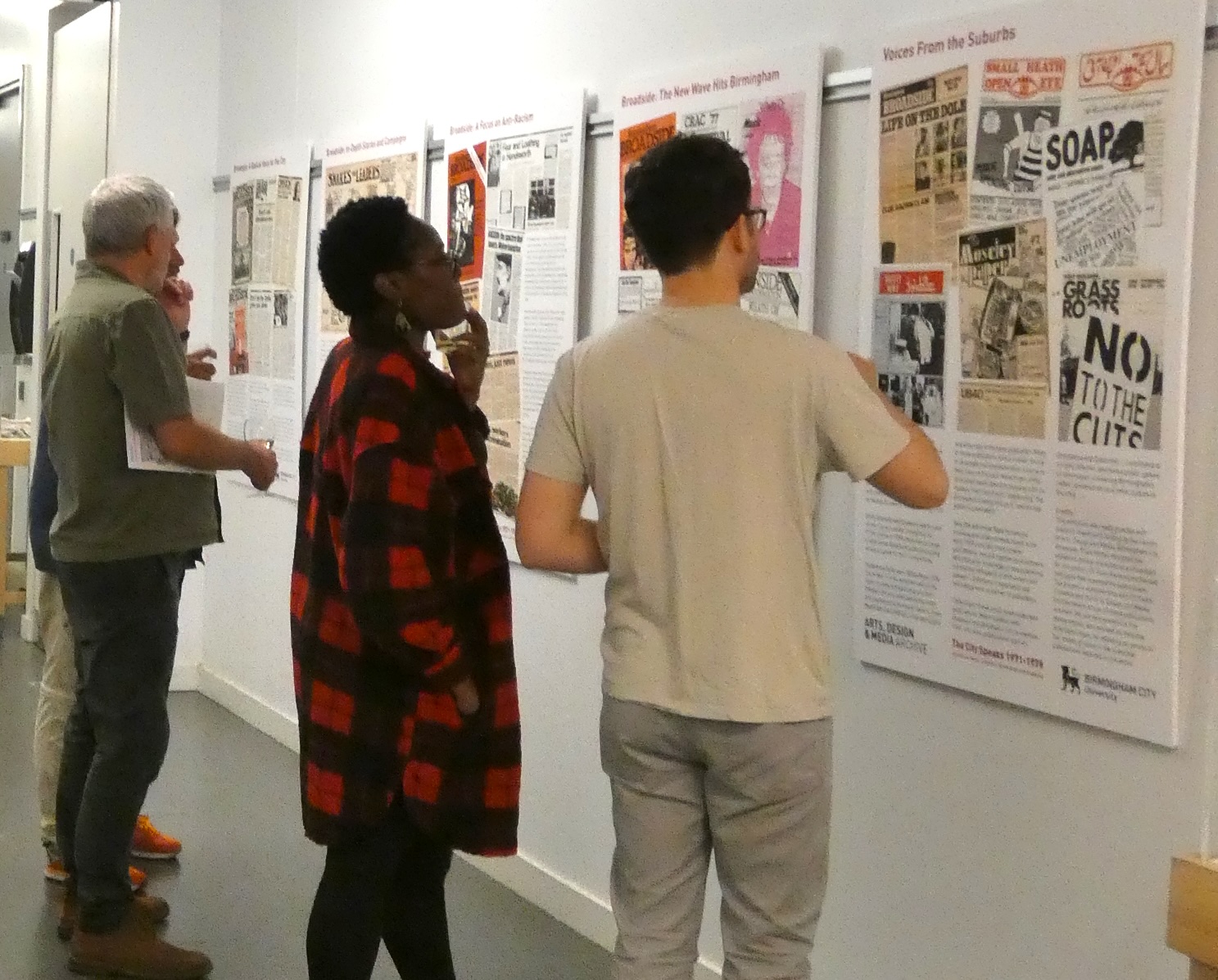
The exhibition ran from May to September 2025
I wrote a short essay in the exhibition pamphlet which you can download here.
Special thanks to Brian Homer who not only co-curated the exhibition with me, he also designed the exhibition panels and the pamphlet.