
Call for Participants: Remnants of Play – A Public History Workshop
Call for participants
Remnants of Play – A Public History Workshop at DiGRA 2026
Sunday 14 June, 10:00-13:00
Remnants of Play is a public history workshop open to all DiGRA attendees, subject to capacity. It seeks to speedrun oral history, encouraging rapid, object-driven recollection, creative production driven by prompt questions, and the re-embedding of the material logics of memory through collaborative output.
The workshop sits at the intersection of (historical) game studies, public history and memory studies. It attends to the significance, and frequent absence, of unique experiences in our understanding of game history, and the importance of objects and materials in the process of their recovery. Drawing on the expertise and engagement of DiGRA researchers, it seeks to develop approaches to thinking about past gaming experiences through practices of remembrance, oral history, and historying. To do this, the workshop invites participants to develop memory materials in relation to a key object from their own gaming history. These ‘remnants of play’ (Webber 2025) will serve as ‘telling objects’ (Wilton 2008), prompts to drive a process of oral-historical engagement, which participants will then turn into short contributions to a digital zine. Contributions will subsequently be presented to the broader DiGRA community and a general public audience via a series of blog posts which each centre a single recollection.
Context
Research in game history is well established and widespread, but continues to demonstrate the need for greater engagement with player histories (e.g. Wade and Webber 2016, Redhead Ahm 2020). Video game museums typically collect gaming tech, copies of games, designer notes and documents, and a smaller amount of attendant materials, including magazines and advertising. Player materials are, however, comparatively absent from these collections: fanwork and player accounts are present only to a limited extent, as are many of the materials that preserve aspects of the play experience, such as player notes, maps, and character sheets. Across work focused on capturing player experience, the materials of play have been increasingly significant, whether in terms of their material (Sihvonen and Suominen 2024), archival (Webber 2019), or narrative (Webber 2023) properties. Most recently, Annakaisa Kultima and Jaakko Stenros (2023) have sought to use personal game histories to challenge hegemonic game histories in the classroom. Here, again, material objects featured: those things that remained when play had ended.
Memory studies and oral history both recognise the significance of objects in recollective practice, ‘telling objects’ (Wilton 2008) which can help oral historians expose deeper layers of memory and meaning. As Laurie Beth Clark (2013: 155) observes, “Some of the best-known elements of memory culture (and some of the most infamous) are the objects—hair and shoes at Auschwitz, clocks and watches stopped at the time of the blast at Hiroshima (8:15) and Nagasaki (11:02), bones in Rwanda and Cambodia.” Such ‘mnemonic objects’ “serve as place holders for things we want to recall” (Clark 2013: 155). The items we choose to keep say something important about us, operating at the intersection of memory, experience and identity. Such intersections are tied to places strongly associated with specific experiences and meaningful moments of the past, with the home commonly evoked (Ratnam 2018). Certainly, for games and play, the domestic context is often critical in recollection, although it is not the only place where people come together to experience and think about games. Friends’ houses, arcades and gaming conventions all play their part.
Could a game conference do so too? Let’s find out!
Format
The workshop will be facilitated by Professor Nick Webber (Birmingham City University) and Professor Jaakko Suominen (University of Turku). Hybrid participation will be available. The workshop will last three hours, and is currently scheduled from 10:00-13:00 on Sunday 14 June.
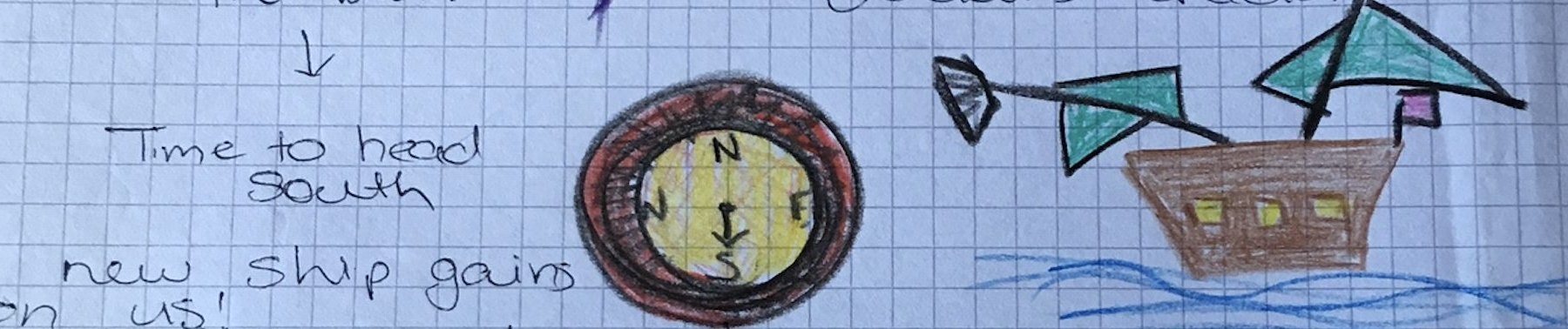
All participants should bring a remnant of play with them to the workshop. This could be anything: a character sheet, a savegame on a floppy disk, a half-empty Pokedex, or fanfic about a guild leader.
We will open the workshop with an explanation of its rationale and our approach to memory practices. We will pose loose overview questions around the evocation of memory, the construction of meaning, and how objects act as material reminders of ephemeral experiences, to prompt participants. Following this, each participant will be invited to tell a story about their remnant in around 2 minutes. After each account, other participants may ask questions to inform the next stage.
Once all stories are told, participants will form small groups and sit together to produce individual creative responses of around 500 words (or equivalent – these can be audio, video, etc.), refining their stories in light of the questions they were asked. Responses are shared within groups for feedback, revised, and discussed in a closing plenary. Each response, along with a picture of the mnemonic object, is also shared with the convenors, who will assemble a digital zine for participants to take away. Responses will be made available to the broader community through a series of blog posts, released weekly on the DiGRA website.
Want to participate?
Given restrictions of time, we will need to limit the workshop to 20 full participants only. However, non-participants attendees are welcome to join as space allows.
If you would like to come along and bring a remnant and a story to share with us, please write to nick.webber@bcu.ac.uk and jaasuo@utu.fi.
References
Clark, L.B. (2013), “Mnemonic Objects: Forensic and Rhetorical Practices in Memorial Culture”, in Memory and Postwar Memorials: Confronting the Violence of the Past, edited by Marc Silberman and Florence Vatan, New York: Palgrave Macmillan, pp. 155-173. https://link.springer.com/chapter/10.1057/9781137343529_9.
Kultima, A. and Stenros, J. (2023) “My Game History: Teaching Against Hegemonic Game History”, Abstract Proceedings of DiGRA 2023 Conference: Limits and Margins of Games, https://doi.org/10.26503/dl.v2023i2.2052.
Ratnam, C. (2018), “Creating home: Intersections of memory and identity”, Geography Compass, 12:e12363, https://doi.org/10.1111/gec3.12363.
Redhead Ahm, K. (2020), “(Re)Playing (with) Video game History: Moving beyond Retrogaming”, Games and Culture, 16(6), pp. 660-680. https://doi.org/10.1177/1555412020955084.
Sihvonen, L. and Suominen, J. (2024), “Studying the Ground of Play: Towards Ludological Semiotics of Playful Traces”, Conference Proceedings of DiGRA 2024 Conference: Playgrounds, https://doi.org/10.26503/dl.v2024i1.2231.
Wade, A., & Webber, N. (2016), “A future for game histories?” Cogent Arts & Humanities, 3(1). https://doi.org/10.1080/23311983.2016.1212635.
Webber, N. (2019), “Table Talk: Archives of Role-Playing’s Personal Pasts”, Analog Game Studies: 2019 Role-Playing Game Summit, https://analoggamestudies.org/2019/12/archives-of-role-playings-personal-pasts/.
Webber, N. (2023), “On, Off, and in the Map: Materializing Game Experiences Through Player Cartography”, in Media Materialities: Form, Format, and Ephemeral Meaning, edited by Iain A. Taylor and Oliver Carter, Bristol: Intellect, pp. 43-66.
Wilton, J. (2008), “Telling Objects: Material Culture and Memory in Oral History Interviews”, The Oral History Association of Australia Journal, 30, pp. 41-49.